
Paths to Ownership › First Investment Property
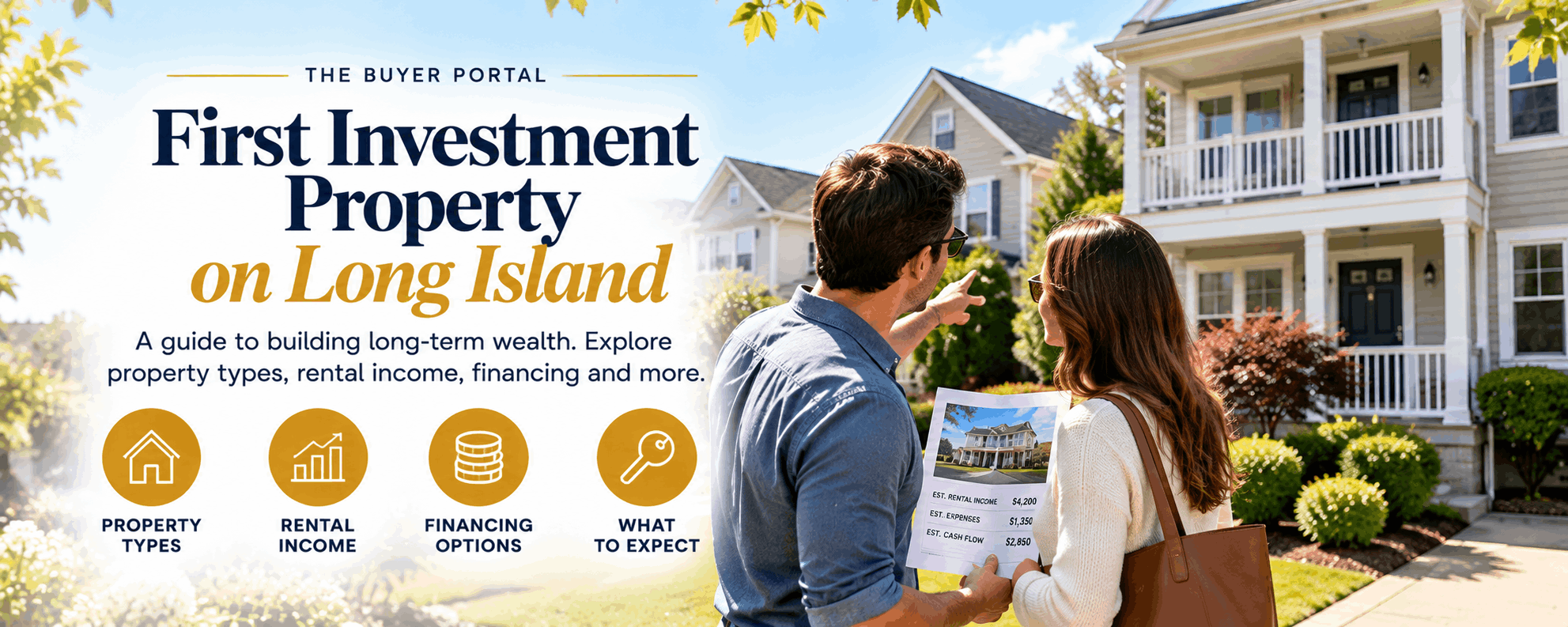
Path 5 · First Investment Property
Buying Your First Investment Property on Long Island
Buying an investment property is different from buying a home for yourself. The property still matters, but the numbers matter more. Rental income, expenses, financing, local rules and taxes all become part of the decision.
- ◆Start with the numbers. Rent, expenses and cash flow, before you fall for a property.
- ◆Know the local rules. Rental permits, legal apartments and which tenant laws follow the property.
- ◆Think beyond today. Your first property can be the start of a longer-term plan.
The Investor Mindset
Your First Investment Should Start With the Numbers, Not the House.
When you buy a home to live in, you can pay a little more for a kitchen you love. When you buy a rental, the kitchen only matters if it changes the rent.
That’s the shift first-time investors have to make. The question isn’t “do I like it?” It’s what it will rent for, what it will cost to own and run, what it needs fixed, and whether it’s even legal to rent the way you’re picturing.
A beautiful property isn’t automatically a good investment.
On Long Island and in Queens, that last part matters more than most new investors expect. Town rules, permits and tenant laws can change the math as much as the price does.
Where Most Investors Start
Four Common First Investments
Two-family, live in one unit
Live in one side, rent the other. You may qualify for owner-occupant financing, and the rent helps carry the mortgage.
Single-family rental
One tenant, one house, simpler to manage. The rent has to cover more of the costs on its own.
Home with an accessory apartment
Can work well, but only if the apartment is legal. Check the certificate of occupancy and town permits.
Condo or co-op rental
Lower price point, but many buildings restrict rentals. Read the rules before you offer.
How co-ops and condos work →Run the Numbers
Two Numbers Every First Investor Should Know
You don’t need a finance degree. You need these two calculations, done honestly:
Cash Flow
| Monthly rent | + |
| Mortgage payment | − |
| Property taxes and insurance | − |
| Repairs and maintenance | − |
| Vacancy allowance | − |
| Management, utilities you pay | − |
| = Monthly cash flow |
Cap Rate
| Yearly rent | + |
| Yearly operating costs (no mortgage) | − |
| = Net operating income | |
| ÷ Purchase price | |
| = Cap rate |
Be honest about vacancy and repairs. The fastest way to fool yourself is to assume twelve months of rent and zero surprises. Budget for a month or two without a tenant and for things breaking, especially in an older Long Island house.
The Rules That Change the Math
Know the Local Rules Before You Buy
Rental permits
Many Long Island towns and villages require a rental permit or registration, often with an inspection and a fee. Rules vary by municipality.
Accessory apartments
Legal in some towns with a permit and conditions, like the owner living on site. An apartment that exists isn’t automatically a legal one.
Good Cause Eviction
Follows the property, not the owner. It applies in New York City, including Queens and Brooklyn, with some small landlord exemptions. As of October 2026, no Long Island municipality has opted in.
Fair housing
Tenant screening has to follow fair housing law, and New York protects tenants from discrimination based on their lawful source of income, including housing vouchers.
Paying for It
How Financing Changes for a Rental
Bigger down payment
Pure investment loans usually need more down than a home you live in.
Owner-occupant options
Living in one unit of a two-family can open financing with a smaller down payment.
Rent as income
Lenders may count part of the expected rent toward qualifying. Ask how much.
Reserves
Lenders often want to see cash in the bank after closing, especially for rentals.
The Investor Mindset
Don’t Just Ask, “Do I Like This Property?”
Ask what it may rent for, what it may cost to operate, what improvements it may need and how those numbers fit your goals.
Talk Through a PropertyYour First Deal
You Don’t Have to Figure It Out Alone.
We help you search for properties, understand the local market, pull rental comparisons and gather what you need to evaluate a deal. Your lender, attorney and accountant handle the financial, legal and tax pieces specific to your situation, and we coordinate with all three.
What First-Time Investors Ask Us
Questions About Your First Investment Property
How much down do I need for an investment property?
Usually more than for a home you live in. Lenders treat a pure rental as higher risk, so minimum down payments and rates tend to be higher. Ask a lender for current minimums on the exact property type you’re considering.
Can I buy a two-family on Long Island and live in one unit?
Yes, and it’s one of the most common ways to start. Because you live there, you may qualify for owner-occupant financing, often with a smaller down payment than a pure investment loan, while the other unit’s rent helps cover the mortgage. Your lender will tell you how much of that rent they’ll count.
Does Good Cause Eviction apply to my rental?
It depends on where the property is, not where you live. The law applies in New York City, including Queens and Brooklyn, with exemptions such as for some small landlords. Other municipalities can opt in, and as of October 2026 no Long Island municipality has. Confirm your property’s status with an attorney.
Do Long Island towns require rental permits?
Many do. Towns and villages across Nassau and Suffolk have their own rental permit or registration rules, with inspections and fees that vary by municipality. Check with the town or village before you buy, not after.
What is a cap rate, in plain English?
It’s a property’s yearly net operating income divided by its price. Net operating income is rent minus operating costs like taxes, insurance, repairs and vacancy, before the mortgage. It lets you compare properties on the same scale, regardless of how you finance them.
Start With a Conversation
Ready to Explore Your First Investment Property?
Tell us your budget, the areas you’re considering and what you’re hoping to accomplish. No contract, no pressure.
Start Your Investment SearchCall (516) 200-1202How Integrity Core Realty Can Help You
Selling during a life transition? Our team handles that too.
Speak With Our Team
Tell Us What You’re Looking For.
Fill out the form below and we’ll reply within one business day. If you’ve already found a property you’re considering, include the address and we’ll start there.